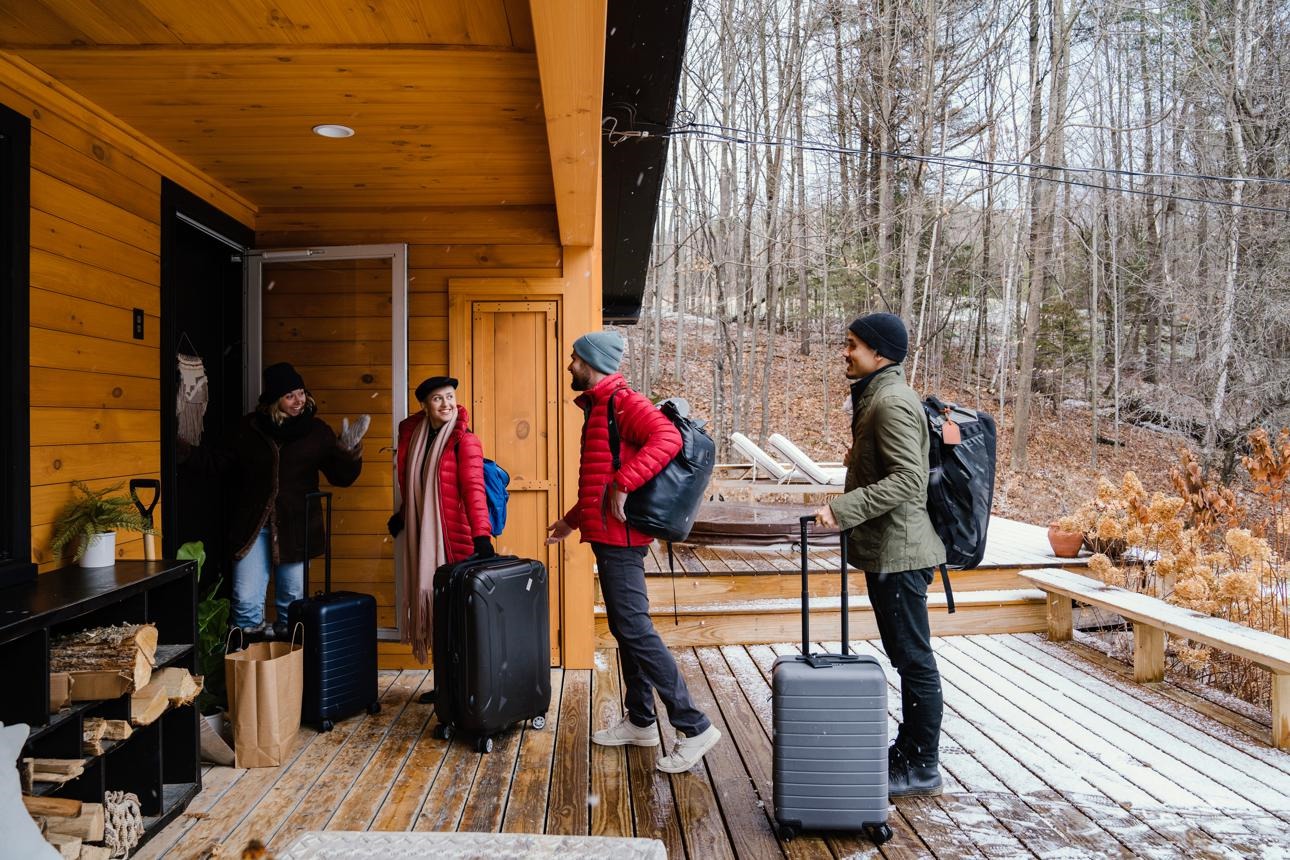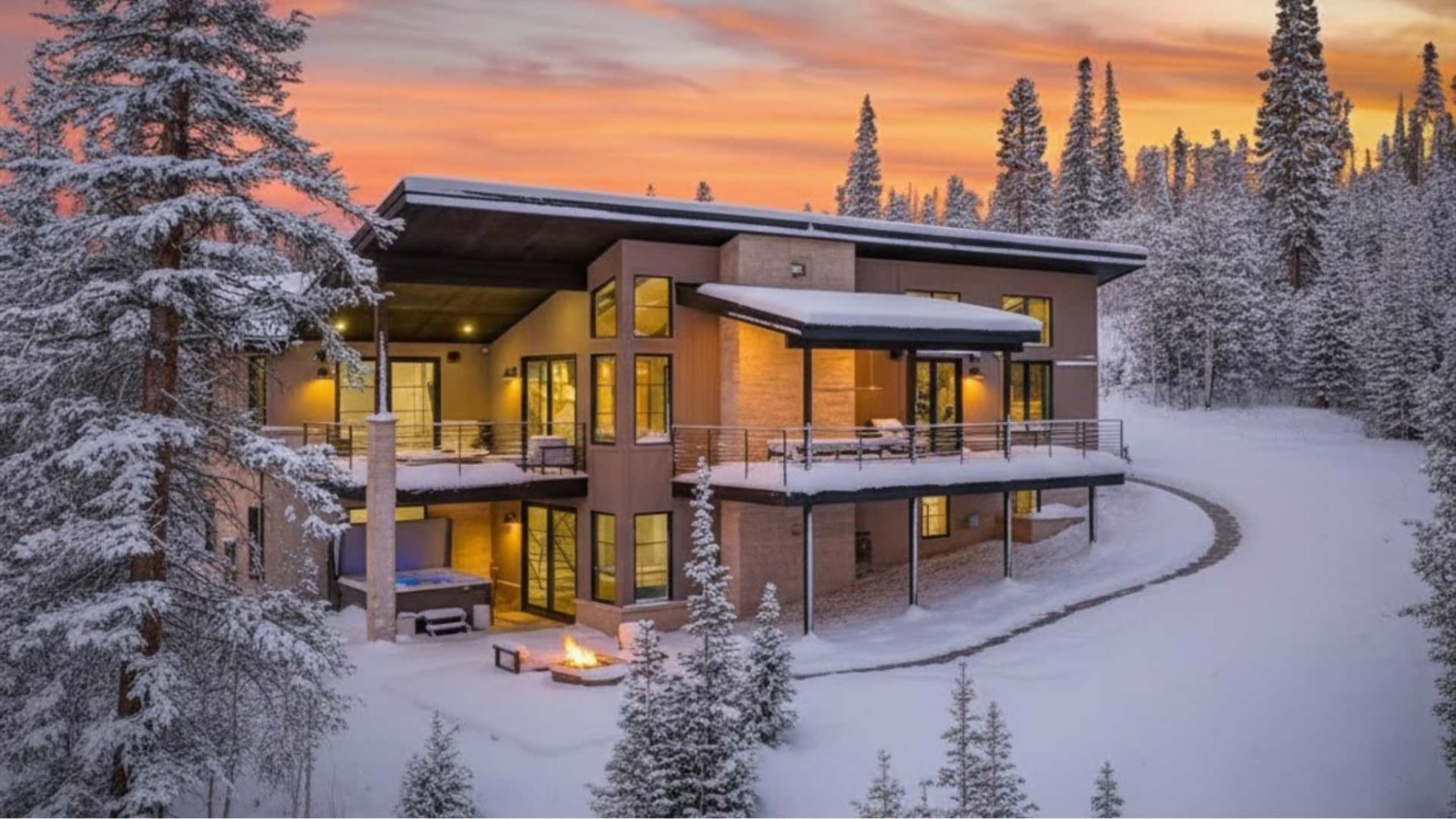
Grand County is not one short-term rental market, it's five or six of them stacked next to each other. Winter Park, Fraser, Tabernash, Granby, and Grand Lake each set their own short-term rental rules, and unincorporated Grand County sets a separate set again for everything outside town limits. A buyer who assumes the STR rules that apply to a condo in downtown Winter Park also apply to a cabin ten minutes away in unincorporated county is often wrong, and that mistake gets expensive when it shows up after closing instead of before an offer.
This isn't unique to Grand County. Colorado's mountain resort towns have largely chosen local control over short-term rentals rather than a uniform state standard, which means licensing requirements, zoning overlays, and occupancy rules are set town by town and can change from one budget cycle to the next. What is unusual is how tightly packed these jurisdictions are here: you can cross from one STR regulatory regime into a completely different one in a five-minute drive along Highway 40.
Do I need a license to run a short-term rental in Grand County?
Quick answer: In nearly every jurisdiction here, yes. Whether you need a business license, a separate STR-specific permit, or both depends on which town or unincorporated area the property sits in.
Every municipality in Grand County that allows short-term rentals requires some form of registration before you can legally list a property on Airbnb, VRBO, or a similar platform. The specifics, application fees, renewal schedules, required inspections, insurance minimums, vary by jurisdiction and by year, which is exactly why "requires verification with the current town office" belongs in every conversation about a prospective STR purchase rather than relying on what a neighbor or a listing description says.
Licensing status does not automatically transfer with a sale in every jurisdiction. Some towns tie the license to the owner, not the property, meaning a buyer has to apply fresh rather than inherit the seller's permit. That can matter enormously for a buyer whose entire purchase math assumes uninterrupted rental income starting the week they close.
Because these rules shift, the single most reliable step before writing an offer on a property you plan to rent short-term is a direct call to that specific town's planning or licensing office, not a general web search, to confirm current requirements, any caps on new licenses, and whether the permit is transferable.
Why do some towns limit how many short-term rentals they allow?
Quick answer: Many mountain resort towns cap or zone short-term rentals to protect long-term housing stock for the local workforce, a pressure that is especially acute in ski towns with a small year-round population.
Grand County's towns depend heavily on seasonal tourism, which creates a persistent tension: STRs generate lodging tax revenue and support the visitor economy, but every unit converted to short-term use is one fewer unit available for the teachers, ski patrol, restaurant staff, and trades workers the local economy also depends on. This tension has led some Colorado mountain towns to introduce caps on new STR licenses in certain zones, primary-residency requirements for owners, or higher fees for non-owner-occupied units.
Whether a specific Grand County town currently has an active cap, a waitlist, or a moratorium on new licenses changes with local politics and housing pressure, so this is squarely in "confirm before you rely on it" territory. A property that could be licensed for STR use last year is not guaranteed to still be eligible today if a cap has since filled.
For a buyer, the practical implication is to ask, before writing an offer, not just "is this currently licensed" but "if I needed to reapply, is that even possible right now." A licensed STR with a transferable permit is a materially different asset than an unlicensed property in a jurisdiction currently under a cap.
What role does my HOA play, separate from the town?
Quick answer: An HOA can restrict or ban short-term rentals even in a town that otherwise allows them, so the covenants matter as much as the municipal code.
Town or county approval to operate a short-term rental does not override a homeowners association's own governing documents. It's common in condo and townhome complexes across mountain resort markets to see rental restrictions layered on top of municipal rules, a minimum-stay requirement such as 30 days, a cap on the percentage of units in a building that can be rented short-term at any one time, or an outright prohibition regardless of what the town allows.
This is one of the most common surprises buyers run into after closing: the town issues the license without issue, but the HOA's covenants, sometimes buried in an amendment passed years after the original declaration, prohibit the exact rental model the buyer planned around. Reading the current covenants, not an outdated copy from an old listing packet, before writing an offer is not optional due diligence, it's foundational.
Ask your agent to pull the HOA's most recent rental policy directly from the association or its management company as part of your due diligence period, and get it in writing rather than relying on a verbal assurance from a seller about what is or isn't allowed.
How does unincorporated Grand County differ from the towns?
Quick answer: Property outside town limits is regulated by Grand County itself rather than a municipal government, and the county's rules operate on their own separate track from any individual town's ordinance.
A significant share of Grand County's cabins and rural residential properties sit outside the boundaries of Winter Park, Fraser, Tabernash, Granby, and Grand Lake, in unincorporated territory governed directly by the county. Grand County administers its own short-term rental licensing and zoning framework for these properties, separate from whatever a nearby town has decided for properties just across the line.
This means two cabins that feel like they're in the same neighborhood, separated only by an invisible municipal boundary, can be subject to entirely different STR rules, one needing a town license and inspection, the other needing a county permit with different requirements and a different office to call.
Buyers looking at rural or semi-rural Grand County properties should confirm jurisdiction first, is this parcel inside a town or in unincorporated county, before assuming which set of rules applies. Your agent can pull this from the county assessor's parcel data quickly, but the licensing rules themselves still need to be confirmed with the relevant office directly.
What should I check before making an offer on a property I plan to rent short-term?
Quick answer: Confirm the jurisdiction, call that office directly about current licensing status and caps, and pull the HOA's current rental policy in writing, all before your offer becomes binding.
Start with jurisdiction: is the property inside Winter Park, Fraser, Tabernash, Granby, or Grand Lake town limits, or in unincorporated county. That single fact determines which office and which set of rules apply. From there, a direct call or email to that office, not a secondhand summary, confirms whether the property currently holds a license, whether that license is transferable to a new owner, and whether any cap or moratorium affects new applications.
Next, request the HOA's current governing documents and any rental policy amendments, in writing, from the association or its management company, rather than relying on what the seller or listing agent believes the rules to be. Covenants get amended, and an amendment from three years ago may have quietly changed what's allowed.
Build this verification into your due diligence period with real deadlines, not as an afterthought after the inspection. An agent who works STR-oriented buyers regularly in this market should already have direct contacts at each town's licensing office and know which questions actually move the process forward.
Frequently Asked Questions
If a property is currently a licensed short-term rental, will the license transfer to me when I buy it?
Quick answer: Not automatically in every jurisdiction. Some towns tie licenses to the property, others to the owner. Confirm directly with the licensing office before assuming continuity.
Can my HOA ban short-term rentals even if the town allows them?
Quick answer: Yes. HOA covenants can be more restrictive than municipal rules, and the stricter of the two controls.
Does Winter Park regulate STRs the same way as Grand Lake?
Quick answer: No. Each town sets its own licensing framework, so rules confirmed for one town should never be assumed to apply in another.
Is there a difference between a long-term rental license and a short-term rental license?
Quick answer: Yes, they are typically governed by different rules, and a property permitted for one is not automatically permitted for the other.
Who do I contact to confirm current STR rules for a specific address?
Quick answer: The planning or licensing department of the town the property sits in, or Grand County directly if the property is in unincorporated territory.
Can STR rules change after I buy the property?
Quick answer: Yes. Local ordinances can be amended, so an STR business model should be built with some tolerance for future regulatory change, not assumed to be permanent.
Do I need proof of insurance to operate a short-term rental here?
Quick answer: Many jurisdictions require specific insurance coverage as part of licensing; confirm current requirements with the licensing office and your insurance agent.
Should I get STR eligibility confirmed before or after my inspection period?
Quick answer: Before, or at minimum as an active parallel track. If eligibility falls through, you want to know while you can still exit the contract cleanly.
If you're shopping for a property in Grand County with short-term rental income in mind, the town line matters as much as the square footage. We walk STR-focused buyers through exactly which jurisdiction a property sits in, which office to call, and what to have in writing before you're locked into a contract.
Let's talk through your target neighborhoods and the current licensing picture in each before you start writing offers.
Gregory Krol
Mountain Property Specialist
720-703-3114
The Real Estate Company -- Mountain Division
Winter Park, Colorado
www.trecwp.com
This post reflects publicly available information as of August 2026 and is subject to change. Short-term rental licensing rules, caps, and fees vary by jurisdiction and are updated by local governments and HOAs independently of this post. Confirm current requirements directly with the relevant town, county, or HOA before purchasing a property for short-term rental use. This is not legal advice.